A qualified metal furniture legs manufacturer should turn your tabletop, load case, installation interface, finish, packaging, and order plan into a controlled specification. Choose a supplier by comparing drawing capability, material traceability, dimensional and finish checks, sample approval, production control, and export documentation—not by appearance alone. Start with a complete RFQ, approve a representative sample, and lock revision-controlled requirements before production.
Furniture brands, importers, distributors, and project buyers need more than a product photo. A dependable quotation begins with the application and ends with measurable acceptance criteria. Identify the tabletop or furniture type, expected use environment, base geometry, critical dimensions, mounting interface, finish, quantity, packing method, and required commercial term. If a requirement affects fit, safety, appearance, or shipment efficiency, put it in the RFQ and drawing.
Use the following procurement specification as a working brief. Mark unknown items for supplier review rather than allowing assumptions to enter the quote.
| Procurement field | What the buyer should provide or confirm | Why it matters |
|---|---|---|
| Application / tabletop | Furniture type; tabletop material, size, thickness, weight; intended market and use environment | Connects the leg or base concept to the actual assembly and intended use |
| Leg / base geometry | Individual legs, frame, X-base, T-base, pedestal, or custom formed/welded structure; quantity per assembly | Defines stability concept, fabrication route, packing volume, and installation method |
| Material | Carbon steel, stainless steel, aluminum, or a buyer-specified grade | Affects fabrication, weight, finish route, cost, and exposure suitability |
| Critical dimensions / tolerances | Overall height, footprint, tube or section size, plate dimensions, flatness, hole location, and clearly identified critical tolerances | Prevents fit problems and separates functional dimensions from noncritical dimensions |
| Mounting plate / hole pattern | Plate outline and thickness; hole diameter, spacing, edge distance, slot direction, countersink or thread details | Ensures compatibility with the tabletop, insert pattern, bracket, or subframe |
| Fastener substrate | Solid wood, engineered board, stone with inserts, metal frame, or another substrate; buyer-selected fastener system | Influences pull-out risk, hole design, reinforcement, and installation instructions |
| Finish / exposure | Powder coating, black matte, galvanized, brushed, polished, custom finish; indoor, humid, sheltered, or outdoor exposure | Aligns pretreatment and finish selection with appearance and service environment |
| Sample / approval | Prototype type, drawing revision, color or finish reference, assembly check, approval owner, and sign-off record | Creates a controlled reference before production |
| Packaging / label | Set configuration, protective separation, logo, cartons, labels, manuals, carton marks, and pallet rules | Reduces cosmetic damage, picking errors, and distribution rework |
| QC evidence | Raw-material record, in-process checks, dimensional report, finish inspection, final test record, photos, or buyer-defined inspection plan | Makes acceptance evidence explicit rather than implied |
| Trade term / quantity | Required quantity, shipment split, destination, target date, and FOB, CIF, EXW, or DDP request | Supports a comparable quote and realistic logistics planning |
Missing mounting data, undefined tabletop construction, vague finish names, and drawings without revision control cause repeated questions. “Black” alone does not define gloss, texture, color standard, pretreatment, or acceptable appearance. Likewise, a base height without a mounting-plate drawing is not enough to confirm fit. Provide native CAD when available, plus a dimensioned PDF that can be reviewed without specialist software.
Separate fixed requirements from open engineering questions. State which dimensions are frozen, which can be optimized for fabrication, and which need a sample decision. Hangzhou Jiansen Hardware Co., Ltd., established in 2004, supports OEM/ODM metal furniture legs and custom sheet-metal fabrication; however, manufacturability review does not replace the buyer’s responsibility to approve the final application, interface, and market requirements.
There is no universal “best” material. The right choice depends on geometry, production method, weight target, appearance, exposure, maintenance expectations, and budget. Carbon steel is commonly considered when forming and welding flexibility are priorities. Stainless steel may be evaluated for a metallic appearance and suitable exposure strategy. Aluminum may be considered where lower component weight or a different fabrication approach matters. The grade and condition should be written into the approved drawing or specification.
Available finish discussions can include powder coating, black matte, galvanized, brushed, polished, and custom finishes. These labels are starting points, not complete specifications. Buyers should identify the substrate, appearance reference, gloss or texture expectation, exposed surfaces, masked areas, acceptable variation, edge coverage, and packaging protection.
State whether the furniture will be used indoors, in humid interiors, in sheltered external locations, or outdoors. Add the destination climate and expected cleaning environment when relevant. Ask the supplier to propose a compatible material, pretreatment, and finish route, then document the approved route. Do not convert a general finish name into an absolute corrosion promise.
For a visual approval, use an agreed color chip, master sample, or controlled finish reference. Define inspection lighting and viewing conditions if appearance is commercially critical. For production, request the evidence that matters to the project: finish inspection records, photos, coating measurements or other buyer-specified checks. If a test method or acceptance threshold is required, place it in the RFQ instead of assuming it applies to every SKU.
A metal table leg manufacturer should receive one controlled drawing package. Each drawing should include part number, revision, units, material, finish, critical-to-function dimensions, mounting details, weld or joint notes, and an approval block. The buyer should also provide an assembly view showing the tabletop, inserts or subframe, fasteners, and leg/base orientation.
For dimensions without individual tolerance callouts, buyers may specify ISO 2768-1 as a reference for general tolerances where appropriate. It is a drawing reference for unspecified tolerances—not a product certification and not evidence that any product is “ISO 2768 certified.” Critical mounting, stability, and appearance dimensions should still receive explicit tolerances agreed by both parties.
Provide the complete hole pattern, not just the mounting-plate outline. Include hole type, diameter, center spacing, edge distance, slot direction, thread, countersink or counterbore details, and datum scheme. Identify the tabletop substrate and any inserts or reinforcement. The leg and the furniture structure must be treated as an assembly because a suitable metal component can still perform poorly when matched to an unsuitable substrate or fastener plan.
Use a single part number and revision across the drawing, quotation, sample record, purchase order, inspection plan, and packaging artwork. Summarize every post-sample change. Do not approve changes only through disconnected messages; issue an updated controlled document and obtain written acknowledgement before production.
A sample is a decision gate, not a souvenir. Sample availability depends on the product and customization. The buyer and supplier should agree whether the sample represents geometry only, production material and finish, packaging, or the complete approved configuration.
Use the intended tabletop construction, insert arrangement, and buyer-selected fasteners. Confirm orientation, access for installation, clearance, hole alignment, leg/base contact, and the assembled footprint. Where project requirements call for formal safety, strength, or durability testing, the buyer should name the test and acceptance criteria in the RFQ.
EN 12521:2023 may be referenced by a buyer for safety, strength, and durability requirements for domestic tables when its scope fits the finished product. Its stated scope does not cover office, non-domestic, outdoor, or trestle tables. Referencing it in an RFQ does not mean a Jiansen SKU has passed it; any applicable testing scope, sample, laboratory, report, and acceptance criteria must be agreed for the specific project.
Quality control should follow the approved specification from incoming material through packed goods. Jiansen’s stated QC process includes raw-material inspection, production monitoring, dimensional checks, finish inspection, and final product testing. Buyers should still define project-specific evidence, sampling, acceptance criteria, and any third-party inspection requirement before ordering.
The company’s ISO 9001 quality management system was audited in 2022. ISO 9001 provides a quality-management-system framework focused on processes and continual improvement; it does not certify the performance of each furniture-leg SKU. Product conformity must be evaluated against the approved drawing, purchase order, inspection plan, and project requirements.
The company reports eight utility model patents in total, including one named “high-strength detachable table leg.” This information can support supplier-background verification, but it should not be interpreted as proof that every category product uses patented technology or meets an unstated performance level. Buyers should evaluate the offered model and project documents directly.
Use evidence that relates to the specific order. A factory profile is useful, but the strongest controls are a clear drawing, an approved sample, an inspection plan, consistent records, and traceable commercial documents.
For company background, review About Us. For common commercial and process questions, use the ਸਵਾਲ and obtain written project-specific confirmation in the quotation.
To buy table bases from China efficiently, compare offers on the same technical and commercial basis. Send the same revision-controlled RFQ to shortlisted suppliers; then normalize material, finish, set contents, inspection evidence, packaging, quantity, trade term, and delivery basis. A lower unit quote may not be comparable if tooling, sample work, protective packaging, inland logistics, documentation, or inspection is treated differently.
Standard lead time is generally 15–30 days, while large-volume orders generally require 30–45 days. Actual timing should be confirmed against the approved design, sample status, material and finish route, quantity, packaging, capacity, and trade term. Treat the confirmed schedule in the quotation or order acknowledgement as controlling.
Available trade terms include FOB, CIF, EXW, and DDP. Ask exactly which named port or place applies and which costs, customs responsibilities, insurance, and destination services are included. Commercial documents can include a commercial invoice, packing list, and certificate of origin. Confirm destination-specific document or marking requirements before production because late changes may affect cartons, labels, or shipment timing.
Buyers can download available company materials and submit a controlled package through the quote-request page.
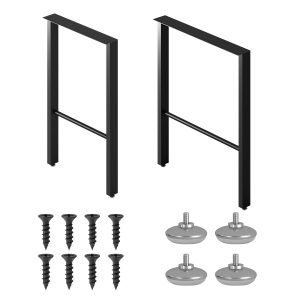
Reference products can clarify geometry and vocabulary, but they do not replace a project drawing or suitability review. Buyers comparing frame-style concepts can review the ZT009/ZT010 X-shape table-leg page. For a different base concept, see the ZT007 pedestal table-base page. The guide to choosing a metal furniture leg for strength and style offers additional selection context; convert any preferred concept into a measurable B2B specification before requesting an OEM quote.
Compare the full assembly: tabletop size and construction, seating clearance, footprint, mounting spread, floor contact, transport volume, installation sequence, and project-specific verification. Geometry can change leverage and load paths, while the mounting substrate and fastener layout influence the final assembly. Ask for a drawing review rather than selecting only from a thumbnail.
Packaging must protect finish and preserve set identity through export handling, warehouse picking, and final installation. Hangzhou Jiansen can support custom packaging, logos, cartons, labels, and manuals. Define the artwork owner, language, barcodes, carton marks, pack quantity, protective materials, and document placement before production release.
MOQ varies by product and level of customization. Send the drawing, finish, packaging, and expected order quantity so the quotation can state the applicable MOQ for that configuration.
Samples are available depending on the product and customization. Confirm whether the sample covers geometry, production material, finish, packaging, or the complete approved configuration before sign-off.
Provide a revision-controlled part and assembly drawing with units, material, finish, critical dimensions and tolerances, datums, mounting-plate details, hole pattern, tabletop substrate, and approval responsibility.
Available finish discussions include powder coating, black matte, galvanized, brushed, polished, and custom finishes. The RFQ should also define substrate, exposure, appearance reference, texture or gloss, masked areas, and acceptance criteria.
Custom packaging can include logos, cartons, labels, and manuals. Buyers should approve artwork, language, barcode data, carton marks, set configuration, protective materials, and document placement before production packing.
Standard lead time is generally 15–30 days, and large-volume orders generally require 30–45 days. The confirmed schedule depends on design approval, sample status, material and finish route, quantity, packaging, capacity, and trade term.


Buying ਧਾਤੂ ਫਰਨੀਚਰ ਲੱਤ in volume? Get factory-direct wholesale pricing and lead times.
Get Wholesale Price →© 2026 Hangzhou Jiansen Hardware Co.,Ltd