
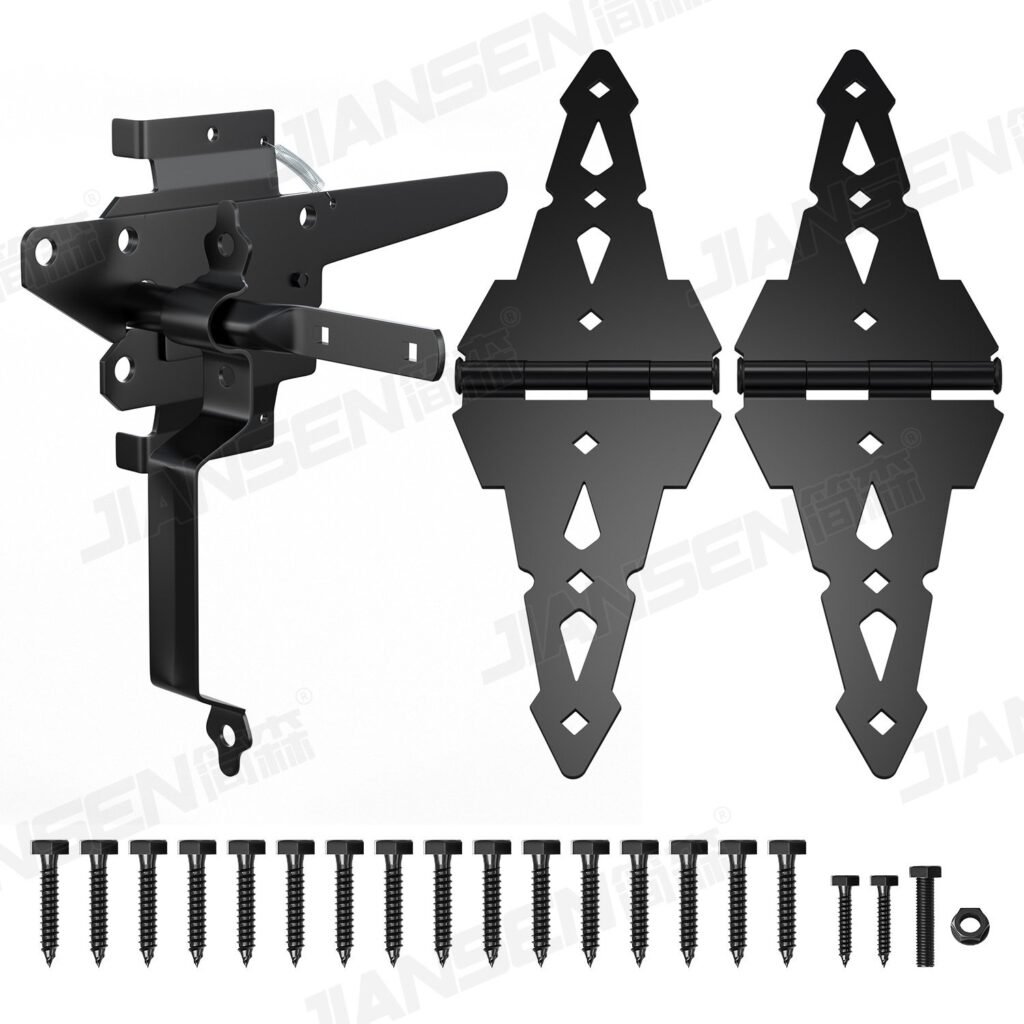
Direct answer: Buy pressure-treated fence hardware as a verified wood–metal system, not as isolated hinges, latches, or screws. The RFQ should identify the preservative system and use category stated by the lumber supplier, whether the wood is wet or dry at assembly, the gate and post construction, exposure, hardware base metal and finish, every fastener, drainage details, packaging, and the evidence required for approval. Where compatibility is not documented, keep it as an open engineering item and validate the exact assembly before production release.
This guide is for importers, fence-system distributors, private-label brands, contractors, and procurement teams. It focuses on treated-wood compatibility and the records needed to compare suppliers. It does not replace structural design, the lumber treater’s instructions, local code, or product-specific test evidence. Buyers can review Jiansen’s fence gate hardware range for component families, then use the controls below to prepare a project RFQ.
Start with the treated wood, not the hardware finish
“Pressure treated” does not identify one chemical, retention, exposure, or end use. The U.S. Environmental Protection Agency lists several preservatives used for residential lumber, including alkaline copper quaternary and copper azole, and notes that treated wood is commonly used outdoors. Procurement teams should therefore ask the lumber supplier or treater for the treatment identification, intended use, applicable label or specification, and handling guidance for the actual lot. Do not infer the preservative from wood color.
Record whether the application is above ground, ground contact, freshwater, splash, or another project-defined exposure. Also record cut ends, field drilling, trapped-water locations, fertilizer or chemical contact, coastal chlorides, and whether wet wood will contact hardware during packing or installation. These conditions help the responsible designer and suppliers review material and coating compatibility.
Request a wood data pack
- Lumber species, grade, nominal and actual section, and structural role.
- Preservative system, treatment standard or label reference, use category, and treating plant or lot identity where required.
- Moisture condition expected at machining, sample assembly, packing, installation, and service.
- Post, rail, stile, picket, backing, and reinforcement arrangement.
- Factory cuts, field cuts, drilled holes, and any specified field treatment.
- Coatings, sealers, adhesives, or membranes that could touch the hardware.
The USDA Forest Products Laboratory’s Wood Handbook is an official technical reference for wood, moisture, metal fasteners, and durability concepts. Use it to frame questions, while allowing project documents and current product instructions to control the actual selection.
Compare hardware systems instead of finish labels
A black surface, a zinc-colored surface, or the word “stainless” does not fully define a compatible assembly. Hardware bodies, hinge pins, springs, washers, screws, bolts, nuts, keeper plates, and field-repair materials can use different metals or finishes. The least suitable interface can determine the first visible corrosion or loss of function.
| Option to compare | Evidence to request | Interface questions | Do not assume |
|---|---|---|---|
| Coated carbon steel | Base material, complete finish stack, process specification, approved appearance sample | Are edges, holes, recesses, welds, threads, and installation damage addressed? | Color alone proves corrosion performance |
| Zinc-coated or galvanized components | Exact coating process and specification for each part | Are coating thickness, threads, cut edges, mating parts, and repair method covered? | All “galvanized” descriptions mean the same process |
| Stainless-steel components | Grade declaration for body, pin, spring, washer, and fastener | Are chloride exposure, fabrication contamination, crevices, and dissimilar metals reviewed? | Every part in a stainless-looking assembly is the same grade |
| Mixed-metal assembly | BOM identifying every metal and finish plus an interface review | Can water remain between dissimilar metals or treated wood and hardware? | A premium visible part protects an incompatible hidden fastener |
| Project-specific system | Representative assembly, agreed test plan, inspection record, and approved drawing | Does the test specimen reproduce the wood, moisture, cuts, fasteners, and exposure? | A report for another SKU or substrate applies automatically |
The American Wood Council’s DCA 6 guide provides prescriptive deck-construction information and discusses corrosion-resistant fasteners and connectors in treated-wood construction. Its deck scope should not be turned into a fence-hardware approval; use applicable principles only after the project professional confirms relevance.
Make every fastener a controlled BOM item
Fasteners are part of the product system. A hinge may be acceptable while an unreviewed screw, washer, or bolt creates a compatibility, fit, or inspection problem. The RFQ and BOM should name each fastener by installation location and tie it to the substrate and hardware component.
Define the fastener fields
- Fastener item number and the exact hinge, latch, keeper, handle, or bracket it secures.
- Type, diameter, length, thread, point, head, drive, washer, nut, and quantity.
- Base material and coating or finish designation.
- Required hole, pilot-hole, backing, through-bolt, or insert arrangement.
- Edge distance, access, and tightening method from approved project documents.
- Compatibility evidence from the fastener, connector, lumber, or preservative supplier.
- Packaging method that prevents fastener mixing and coating damage.
Do not substitute a visually similar fastener without written approval. Changes in coating, length, head geometry, or thread can affect installation, appearance, contact area, and the ability to inspect the packed kit.
Control water, debris, and dissimilar-metal interfaces
Outdoor hardware should shed water rather than trap it against treated wood. Review horizontal ledges, closed cavities, overlapping plates, countersinks, keeper pockets, and the lower faces of hinges. Identify locations where sawdust, fertilizer, soil, leaves, or cleaning residue can collect. The drawing should show any drainage path, isolation layer, stand-off, or sealing detail approved by the responsible designer.
The American Galvanizers Association explains that dissimilar metals in electrical contact can create galvanic concerns depending on the metals and environment. Its dissimilar-metals guidance is a useful design reference, not proof that a particular Jiansen SKU or fence assembly is suitable. Require the proposed material pairing and wet-contact condition to be reviewed for the actual project.
Build a pressure-treated fence hardware RFQ
| RFQ field | Buyer input | Supplier output required |
|---|---|---|
| Application | Fence and gate type, target market, use, exposure, maintenance access | Proposed component family and listed assumptions |
| Treated wood | Species, sections, preservative, use category, moisture state, lot documents | Compatibility questions and required confirmations |
| Gate geometry | Width, height, thickness, measured mass, frame, post, swing, clearances | Interface drawing, proposed hinge and latch arrangement |
| Hardware construction | Required functions and appearance | Material and finish declaration for every component |
| Fasteners | Substrates, access, buyer constraints | Itemized schedule, inclusion/exclusion, installation assumptions |
| Evidence | Required standards, test methods, inspection stages, acceptance owner | Applicable reports tied to exact specimens and revisions |
| Commercial pack | Quantity, unit pack, labels, barcode, instructions, carton marks, destination | Quotation, BOM, pack-out drawing, artwork proof, sample plan |
| Change control | Buyer approval required before changes | Named notice route for material, finish, fastener, process, or packaging changes |
Send the same revision-controlled package to every bidder. Jiansen should be assessed with the same evidence matrix as any other supplier: a website category can support discovery, but the current quotation, approved drawing, BOM, sample record, and purchase order must control the transaction.
Approve a representative treated-wood assembly
A loose hardware sample cannot reproduce wood movement, fastener installation, coating damage, trapped moisture, gate alignment, or latch engagement. Build a representative sample using the intended wood treatment and moisture condition, or document every deviation when an exact match is unavailable.
Run the sample through six approval steps
- Verify identity. Match the wood record, hardware drawing, BOM, fastener schedule, finish reference, and sample ID.
- Inspect before assembly. Record visible finish condition, edges, holes, threads, fastener identity, and component counts.
- Install by the approved method. Use the specified pilot, backing, torque or tightening method, edge locations, and treatment of field cuts.
- Check the complete function. Operate the gate through its full travel and check hinge alignment, clearances, stop action, latch engagement, and accessible fasteners.
- Evaluate exposed interfaces. Check water traps, damaged coatings, mixed-metal contact, exposed cut wood, and locations that cannot be maintained.
- Freeze the evidence. Retain photographs, measurements, drawing and BOM revisions, deviations, approvers, and the disposition.
For deeper hinge geometry and supplier questions, use the existing fence hinge types, finishes, and OEM sourcing guide. That page covers hinge selection; this article remains focused on compatibility with pressure-treated wood.
Specify corrosion tests without inventing performance
If accelerated corrosion testing is required, name the standard, specimen, preparation, exposure, evaluation points, acceptance criteria, and report format in the purchase agreement. Do not state a salt-spray duration unless it comes from the project specification and a valid report for the exact assembly. A test on an uninstalled metal coupon may not represent field-cut wood, fastener damage, crevices, or mixed components.
Likewise, do not convert a laboratory result into years of outdoor service without a validated correlation. Service conditions vary with moisture, chlorides, temperature, maintenance, installation damage, and water retention. The correct procurement claim is narrow: the tested specimen met or did not meet the agreed method and criteria.
Turn production controls into receiving checks
Inspect identity, fit, finish, and pack-out
- Purchase order, drawing, BOM, finish, fastener, and packaging revisions match.
- Hardware bodies, moving parts, washers, and fasteners match declared materials and finishes.
- Critical dimensions and hole patterns are recorded by the approved method.
- Components assemble on the defined fixture or representative treated-wood sample.
- Visible finish, edges, recesses, threads, and contact marks meet agreed boundaries.
- Each kit contains the correct fastener type and count for each component.
- Instructions identify any wood-treatment, cutting, drilling, drainage, or maintenance conditions required by the project.
- Labels, barcode data, pack identity, carton marks, and protective separation match approved files.
- Nonconforming units remain identified and segregated until authorized disposition.
Sampling, defect classes, and acceptance numbers must be agreed for the order. Do not insert a default AQL or universal critical-dimension tolerance into a generic guide.
Use a final purchase-release checklist
- The treated-lumber identity and intended use are documented.
- The gate, post, and mounting interfaces are represented by controlled drawings.
- Every metal, coating, pin, spring, washer, and fastener is identified in the BOM.
- Compatibility questions are closed with applicable supplier or project evidence.
- Drainage, crevices, cut ends, drilled holes, and coating repair are addressed.
- A representative assembly sample is approved with recorded deviations.
- Test methods and acceptance criteria are written without unsupported life claims.
- Packaging prevents mixed fasteners and avoidable finish damage.
- Inspection and change-control responsibilities are named.
- No certification, load, corrosion-hour, cycle-life, MOQ, lead-time, price, or compliance claim is released without exact evidence.
Frequently asked questions
What information should a pressure-treated fence hardware RFQ include?
Include the lumber species and sections, preservative and use category, moisture condition, gate and post drawings, exposure, hardware functions, every metal and finish, a fastener schedule, packaging, inspection requirements, and required evidence. Mark unresolved compatibility fields for written supplier or project review.
Can hardware be selected from the phrase “pressure treated” alone?
No. “Pressure treated” does not identify one preservative, retention, use category, moisture condition, or exposure. Obtain the treatment information for the actual lumber and evaluate the complete hardware-and-fastener system against it.
Should screws and bolts be specified separately from hinges and latches?
Yes. Each fastener should be a controlled BOM item linked to its hardware component, substrate, dimensions, material, finish, installation method, and packaging count. Do not approve an unlisted substitution because it looks similar.
Does stainless steel automatically solve every treated-wood compatibility issue?
No. The exact grade, all mating components, fabrication condition, chlorides, crevices, drainage, and dissimilar-metal contacts still require review. “Stainless” on a visible body does not identify every pin, spring, washer, or fastener.
What should a representative assembly sample reproduce?
It should reproduce or clearly document the intended treated wood, moisture condition, gate and post interfaces, hardware revision, fasteners, installation method, cuts and holes, finish, drainage details, operating clearances, and packaging configuration.
Can salt-spray hours be used as a field-life promise?
No. An accelerated corrosion result applies to the stated method, specimen, preparation, duration, and evaluation. It should not be converted into years of outdoor service without a validated correlation for the actual assembly and environment.
Which documents should control the purchase?
The purchase order should identify the approved RFQ, quotation, drawings, BOM, fastener schedule, finish reference, sample record, test plan, packaging specification, artwork, inspection plan, and authorized deviations. Product pages should remain discovery references.
Authoritative sources
- U.S. Environmental Protection Agency — Overview of Wood Preservative Chemicals
- USDA Forest Products Laboratory — Wood Handbook
- American Wood Council — DCA 6 Prescriptive Residential Wood Deck Construction Guide
- American Galvanizers Association — Dissimilar Metals in Contact
For a project-specific review, send the treated-wood data, gate drawing, required component functions, fastener expectations, and evidence list through the Jiansen contact page. Keep every unverified performance or commercial value open until it is confirmed for the quoted configuration.
