
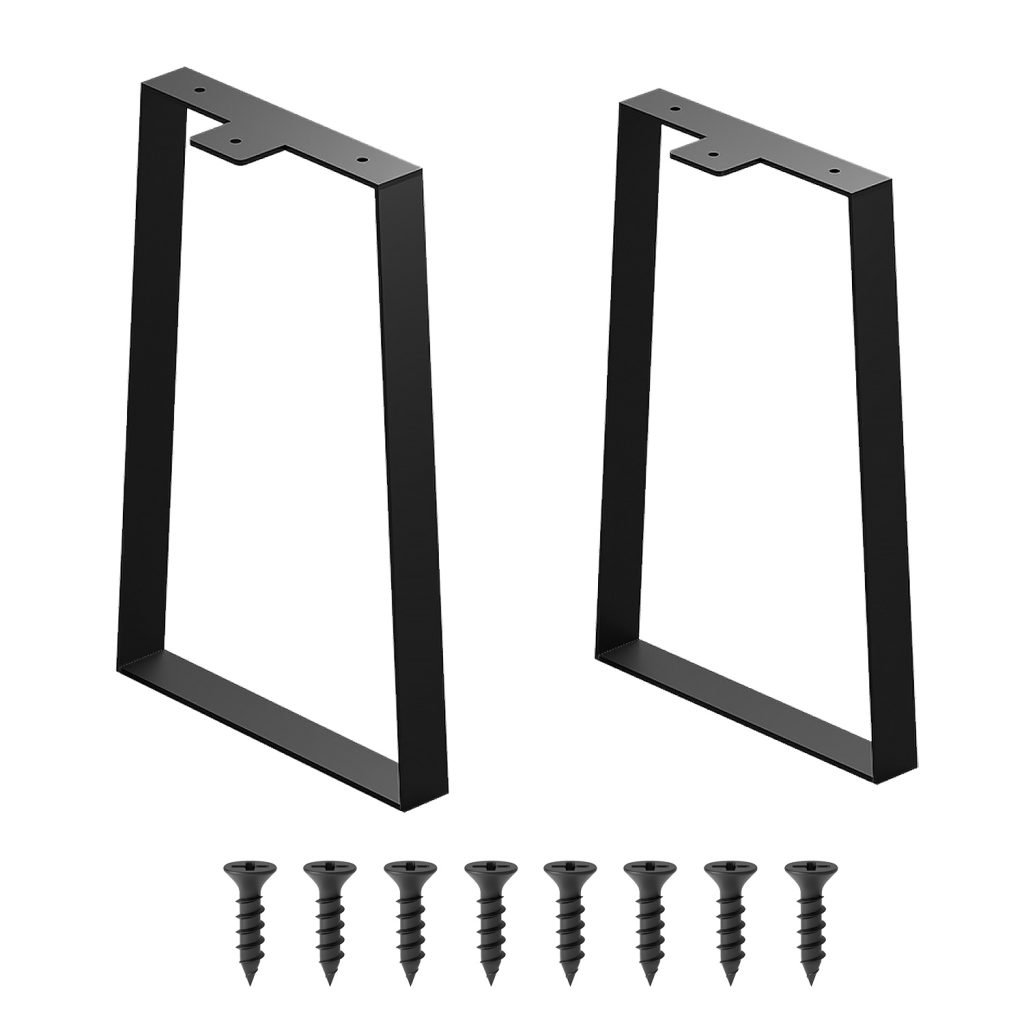
Direct answer: Select a metal chair base manufacturer by issuing the same revision-controlled RFQ to every candidate, then comparing process fit, interface control, sample-assembly evidence, inspection methods, packaging, and change management. Define the complete chair—not only the visible base—before quotation. Do not release production from a photograph, an unsupported “heavy-duty” statement, or the lowest unit price.
This guide is for furniture brands, contract-furniture buyers, importers, distributors, and OEM teams sourcing fixed, swivel, pedestal, multi-leg, welded, formed, or die-cast metal chair bases. It covers specification, supplier comparison, sampling, quality control, installation, and receiving. It does not assign a certification, load rating, salt-spray duration, cycle life, MOQ, lead time, price, or compliance status to any supplier.
Define the complete chair interface before requesting quotes
A chair base is one element in a load path that includes the seat, mounting plate, column or frame, fasteners, glides or casters, upholstery, and user contact points. A visually similar base can fail the project because its bolt pattern, taper, column socket, rotation envelope, floor contact, or tool access differs. Give suppliers a controlled assembly drawing and identify the intended market and use environment so they can return questions rather than silent assumptions.
Assign a part number and revision to every component. Mark datums and critical-to-fit characteristics. Show the seat underside, column connection, mounting plate, inserts, welds, ribs, bosses, glide or caster interfaces, cable routing where relevant, and the required assembly sequence. If the chair includes a swivel, tilt, height-adjustment, or return mechanism, identify the approved mating component and its interface; do not ask the base supplier to infer it.
Include these RFQ fields
| RFQ field | Buyer input | Supplier response or evidence |
|---|---|---|
| Application | Chair type, user environment, intended market, fixed or moving configuration | Feasibility review, questions, and assumptions |
| Assembly files | Revision-controlled 3D model, dimensioned drawings, BOM, exploded view | Marked-up file set and document hierarchy confirmation |
| Interfaces | Seat pattern, column or frame joint, fasteners, inserts, glide/caster details | Interface dimensions and inspection method |
| Material | Approved grade, product form, thickness, substitution rule | Declared construction and traceability proposal |
| Process | Permitted fabrication or casting constraints and visible-surface boundaries | Proposed route, tooling, fixtures, outsourced operations |
| Finish | Color/master sample, texture, gloss boundary, exposed and masked zones | Pretreatment and finish route for approval |
| Inspection | Critical characteristics, method, gauges, sample plan, record format | Control plan and sample report |
| Packaging | Set contents, separators, surface protection, labels, carton/pallet rules | Pack-out drawing and validation proposal |
| Commercial request | Forecast, requested quantity, shipment plan, destination, Incoterm request | Written quotation, assumptions, exclusions, tooling and sample terms |
Use Jiansen’s public metal furniture leg category to establish terminology and adjacent product families, but treat catalog pages as discovery material. The signed drawing, BOM, approved sample record, and purchase order must control the chair-base order.
Compare manufacturing routes against the design
The appropriate route depends on geometry, forecast volume, tooling economics, visible surfaces, structural load path, and interface risk. Ask each bidder to explain how the proposed process creates every critical feature and how variation is controlled. “We can make it” is not evidence.
| Route | Common design context | Buyer questions | Approval evidence |
|---|---|---|---|
| Tube cutting, bending, and welding | Sled, four-leg, or framed bases | How are bend orientation, joint gaps, weld sequence, and distortion controlled? | Fixture plan, dimensional report, joint sample |
| Stamped or laser-cut sheet with forming | Mounting plates, shells, brackets, folded legs | Which hole-to-bend and datum dimensions control seat fit? | First-piece report and controlled flat pattern |
| Die casting with secondary machining | Integrated spokes, bosses, or complex visible geometry | Which features are cast, machined, or finished; how are die revisions controlled? | Tooling record, drawing, measured sample, declared alloy |
| Fabricated plate and column assembly | Pedestal or custom contract-furniture bases | How are perpendicularity, runout, plate flatness, and joint distortion checked? | Fixture and interface measurement report |
| Mechanically assembled base | Knock-down shipping or serviceable modules | How are orientation, fastener access, thread engagement, and loose parts controlled? | Assembly trial and pack-out check |
A supplier may outsource casting, coating, machining, or testing. That is not automatically a failure, but the quote should disclose the operation, responsible party, incoming verification, change-control route, and nonconformance owner. Compare the complete process chain rather than the final assembly station alone.
Compare suppliers with a documented evidence matrix
Use the same matrix and weighting for every bidder. Separate a stated capability from evidence produced for the proposed chair-base route. Separate technical evidence from commercial terms. A polished sample does not prove that drawing revisions, tooling changes, or later lots will remain controlled.
| Comparison category | Evidence to request | Warning sign |
|---|---|---|
| Requirement review | Marked-up RFQ with questions, exclusions, and assumptions | Blanket “no problem” response |
| Drawing control | Part-number and revision workflow across quote, sample, production, inspection | Conflicting files or unnumbered drawings |
| Process fit | Flow chart naming casting/fabrication, machining, fixturing, finishing, and checks | Generic factory photos with no project route |
| Interface measurement | Methods, gauges, fixtures, calibration approach, sample report | “QC passed” with no measured result |
| Sample assembly | Representative mating parts, written results, deviations, photographs | Appearance-only sample approval |
| Finish control | Declared system, boundary sample, masked zones, handling plan | Color name alone |
| Packaging | Pack-out drawing, surface separators, accessory count, label proof | Loose metal-to-metal contact |
| Change management | Written approval before material, tool, die, fixture, process, or subcontractor changes | Undocumented “equivalent” substitutions |
Apply this matrix to Jiansen and every alternative without relaxing evidence requirements for familiarity, price, or prior orders. For a broader workflow, consult the existing metal furniture frame sourcing guide, while keeping this project’s chair-base interfaces and acceptance records separate.
Control drawings, materials, tooling, and substitutions
Specify material by buyer-approved grade and product form where they matter. “Steel,” “stainless,” “aluminum,” or “zinc alloy” alone may not adequately control the ordered construction. Define which record links material to the purchase lot. If an alternative might be acceptable, require a written proposal and buyer approval before use.
General tolerances can simplify drawings, but every chair interface and critical-to-function characteristic needs an intentional limit and datum scheme. The official ISO 2768 listing describes general dimensional tolerancing; referencing it does not certify a product or supplier. Identify the controlling edition in the contract and resolve critical limits explicitly.
Control tooling as a purchasing asset
For a die, mold, dedicated fixture, checking gauge, or assembly jig, record ownership, identification, storage, maintenance, revision, modification approval, and end-of-project disposition. Ask whether pilot samples and production samples use the same tool and process. If temporary tooling is used, document what it cannot validate and which checks repeat after production tooling is available.
Freeze one document hierarchy. A signed deviation or approved drawing should not be silently overridden by a catalog page or an older email attachment. State which file controls when the purchase order, drawing, BOM, finish specification, packaging file, and inspection plan conflict.
Approve a representative sample and chair assembly
A sample should represent the decisions it is intended to approve. Record part number, revision, material, process route, tooling status, finish reference, and deviations. Approval of appearance does not automatically approve dimensions, function, packing, or performance.
- Close the supplier’s marked-up RFQ and freeze open decisions.
- Confirm drawing, BOM, finish reference, mating components, and fasteners.
- Measure critical datums, seat pattern, column or frame interface, and floor-contact features.
- Assemble with representative seat, column, mechanism, glides or casters, and buyer-approved fasteners.
- Check orientation, tool access, full contact, clearance, alignment, level support, and intended movement.
- Record defects, concessions, rework, corrective action, and resubmission requirements.
- Approve in writing only after affected documents and evidence agree.
Do not infer a safe load, impact resistance, stability, or service life from a visual sample. If performance matters, the buyer must define the complete chair configuration, applicable method, specimen, laboratory or witness requirements, and acceptance criteria. Evidence must match the ordered configuration.
Build inspection around critical chair interfaces
Each check needs a specification source, instrument or fixture, method, acceptance criterion, and recorded result. For initial production, focus on characteristics influenced by tooling, die condition, weld sequence, machining datums, coating buildup, and assembly. Later sampling should follow a buyer-approved risk decision and documented history.
Use this receiving checklist
- Verify supplier, purchase order, part number, revision, lot, and quantity.
- Match material records to the agreed traceability requirement.
- Measure the seat pattern, column or frame interface, key datums, height, and floor-contact geometry.
- Check threads, inserts, holes, bosses, weld locations, machined surfaces, and glide/caster interfaces.
- Run a mating-part or fixture check without forcing or modifying parts.
- Inspect finish color, texture, coverage, masking, visible defects, and handling damage against the approved boundary.
- Confirm accessory count, fastener identity, labels, instructions, and set completeness.
- Quarantine discrepancies and obtain written disposition before rework or use.
The official ISO 2859-1:2026 listing explains lot-by-lot attribute sampling schemes. Do not copy an AQL, inspection level, sample size, or acceptance number from another project; the buyer must approve the plan for this risk and supply relationship.
Specify welding, finishing, and corrosion evidence carefully
For welded bases, show joint location and requirements in controlled documents. Ask how fixtures, tack sequence, heat input, and handling manage distortion and visible surfaces. The manufacturer is responsible for its workplace controls; OSHA’s welding, cutting, and brazing resources describe occupational hazards and standards, but a citation is not supplier certification.
Finish names are incomplete specifications. Define substrate preparation, approved color or master, gloss and texture boundary, exposed faces, masked areas, contact points, and packaging protection. For brushed surfaces, state direction and visual boundary. Require written approval before changing pretreatment, coating material, finisher, or process route.
If corrosion testing is contractually required, specify the method, specimen, coating system, preparation, exposure, evaluation, allowable defects, and treatment of edges and fastener interfaces. ASTM B117 defines salt-spray apparatus and practice, but does not prescribe one universal exposure period or predict service life. Do not publish an hour value without a valid report tied to the supplied configuration.
Plan installation before production release
The controlled installation instruction should identify each component, orientation, mating interface, fasteners, assembly sequence, tool access, and final inspection. It should distinguish factory assembly from installer work and list steps that must not be improvised. Where engineering values are not approved, mark them as open rather than inventing them.
Run a documented assembly trial
- Verify that the base, seat, column or mechanism, glides or casters, inserts, and fasteners match approved revisions.
- Protect visible surfaces and place parts on a stable work surface.
- Orient the base using drawing datums and start connections without forcing misaligned holes.
- Follow the buyer-approved sequence and any engineered tightening values.
- Check seating, clearances, interference, floor contact, rotation or movement envelope where applicable, and visible damage.
- Record the result; escalate misfit rather than drilling, grinding, bending, or substituting hardware without authorization.
Use the public Jiansen contact page to send a project-specific RFQ package. The inquiry should attach controlled files and ask for itemized responses; an informal product name is not enough to establish the specification.
Release the supplier only after a complete handoff
Before production, attach the approved drawing, BOM, sample report, finish boundary, packaging specification, label artwork, inspection plan, and change-control clause to the purchase order. Resolve tool ownership, revision numbering, deviation authority, nonconformance escalation, and the document hierarchy. State the requested Incoterm and named place, while requiring current commercial commitments in the quotation.
Use this supplier-release checklist
- Supplier identity and manufacturing location are recorded.
- Outsourced processes and control responsibilities are disclosed.
- Drawing, BOM, material, finish, packaging, inspection, and label revisions agree.
- All assumptions, exclusions, substitutions, and deviations have written dispositions.
- The representative sample and complete-chair assembly trial are documented.
- Critical characteristics have methods and buyer-approved acceptance criteria.
- Tooling, fixtures, gauges, and change approval are controlled.
- Packaging protects visible surfaces and prevents component mixing.
- No certification, load, salt-spray, cycle-life, MOQ, lead-time, price, or compliance statement is accepted without project-specific evidence.
Frequently asked questions
What should a metal chair base manufacturer RFQ include?
Include the chair application, seat and column interfaces, drawings and revisions, material and process requirements, critical dimensions, finish reference, fasteners, sample scope, inspection method, packaging, destination, requested trade term, and quantity request. Ask the supplier to return every assumption, exclusion, and proposed substitution in writing.
How should buyers compare metal chair base suppliers?
Issue the same controlled RFQ to every candidate and compare documented evidence for drawing control, process fit, tooling, measurement, sample assembly, finish control, packaging, change management, and corrective action. Keep capabilities, evidence, commercial terms, and unresolved risks in separate columns.
Is a die-cast chair base always better than a fabricated base?
No. The suitable route depends on geometry, interfaces, appearance, tooling strategy, forecast volume, inspection needs, and the complete chair design. Compare supplier proposals against the same approved drawing and project-specific acceptance criteria rather than assuming one process is universally superior.
What should be checked during a chair base sample assembly?
Check revision identity, seat and column fit, hole alignment, fastener access, contact surfaces, orientation, clearances, level support, interference through intended movement, visible finish, accessory completeness, and packaging. Record results and do not force, drill, grind, or rework a nonconforming sample without authorization.
Can a supplier quote a load rating from a similar chair base?
A similar catalog item or photograph is not project-specific evidence. If strength, stability, impact, or durability matters, define the complete chair configuration, applicable test method, specimen, laboratory or witness requirements, and acceptance criteria, then require evidence tied to the ordered configuration.
How should buyers specify corrosion testing for a chair base?
State the test method, substrate, coating system, specimen preparation, exposure period, evaluation method, allowable defects, and treatment of edges and fastener interfaces. ASTM B117 describes salt-spray apparatus and practice, but it does not prescribe one universal exposure duration or prove service life.
When should a metal chair base be resampled?
Consider resampling after changes to the drawing, material, tooling, die, fixture, welding route, finish system, subcontractor, mating component, packaging, or a corrective action that can affect fit, function, or appearance. Define which checks repeat and obtain written buyer approval before production release.
Authoritative references
- ISO 2768 — Dimensional tolerancing
- ISO 2859-1:2026 — Sampling procedures for inspection by attributes
- OSHA — Welding, Cutting, and Brazing
- ASTM B117 — Salt Spray (Fog) Apparatus
Conclude with evidence, not assumptions
A defensible sourcing decision turns a chair concept into controlled interfaces, documents, samples, inspection records, and release rules. Compare manufacturers by evidence from the proposed process, validate the complete assembly, and keep revisions aligned from RFQ through receiving. This method supports a reliable commercial decision without relying on unsupported marketing claims.
