
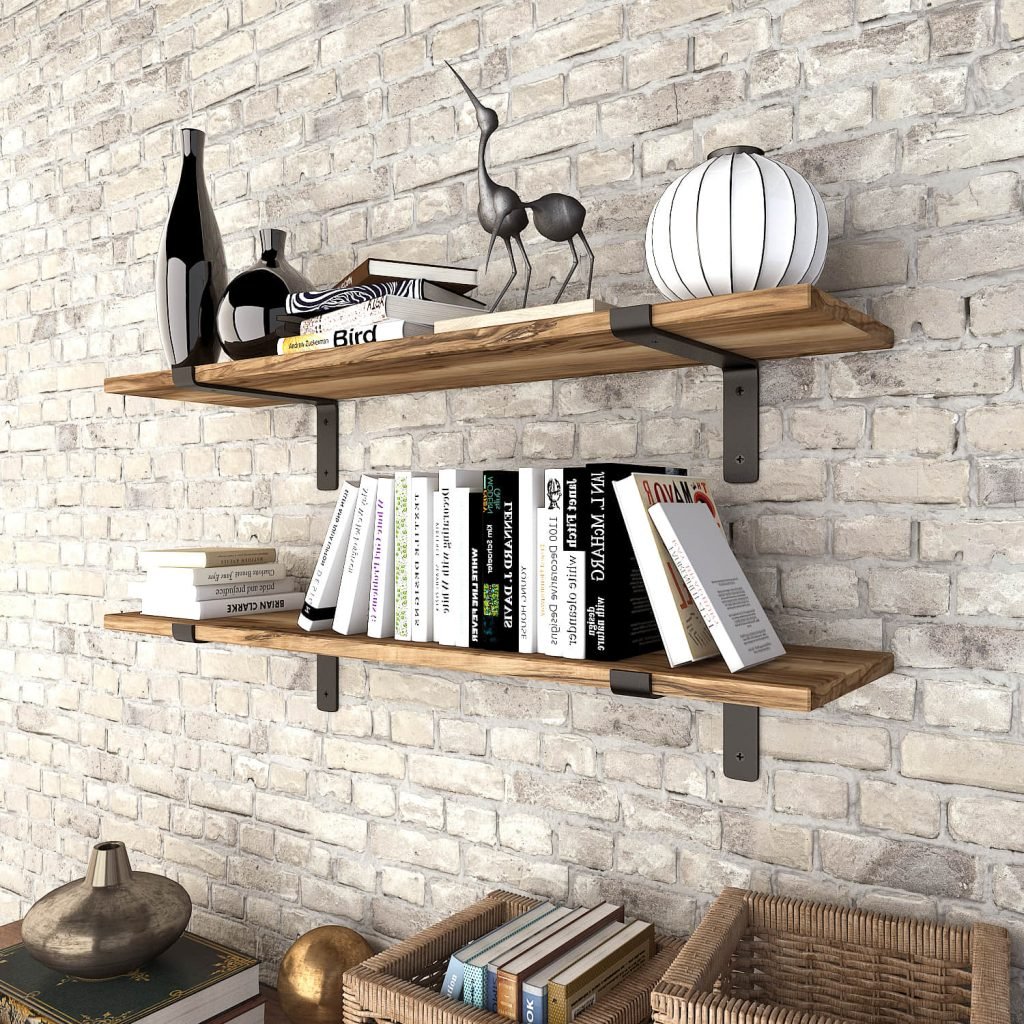
Direct answer: B2B buyers should specify heavy duty shelf brackets as engineered assemblies, not as catalogue shapes. A complete request for quotation should define the bracket geometry, material, manufacturing route, wall and shelf interfaces, finish system, approved sample, inspection method, packaging, and change-control rules. The required load must be validated for the buyer’s complete shelf system and installation conditions; a bracket label or material thickness alone does not establish safe working capacity.
This guide gives importers, distributors, fixture manufacturers, and project buyers a practical specification and quality-control framework. It complements Jiansen’s L-shape wall-mounted bracket, industrial floating shelf bracket, and hidden shelf support product families without treating any one catalogue item as suitable for every project.
What should a heavy duty shelf bracket specification include?
A useful specification must tell the supplier what to make, how the part will interface with the complete assembly, and how conformity will be verified. Start with a controlled drawing and a revision-controlled bill of materials. Do not rely on an image, a marketplace title, or the phrase “heavy duty.” Those references can start a discussion, but they do not define acceptance.
| Specification block | Buyer must define | Supplier evidence |
|---|---|---|
| Application | Shelf type, wall substrate, installation environment, load direction, use category | Application review and identified assumptions |
| Geometry | Leg lengths, width, thickness, bend angle, hole and slot locations, edge radii | Controlled drawing and inspection points |
| Material | Material family, grade, temper or condition where relevant, approved equivalents | Purchase record or material evidence tied to the lot |
| Manufacturing | Cutting, punching, bending, welding, machining, deburring, permitted repair | Process route and in-process controls |
| Finish | Finish system, colour reference, surface preparation, appearance limits, test method | Process record, approved colour sample, test report when required |
| Inspection | Critical characteristics, gauges, sample plan, acceptance and rejection rules | First-article and batch inspection reports |
| Packaging | Unit protection, quantity per carton, labels, accessories, pallet and moisture controls | Packing sample and packing-list reconciliation |
How should buyers define the load requirement?
Define the required performance for the complete installed shelf system, not only for a loose bracket. The result depends on the bracket geometry, shelf material, fasteners, spacing, wall substrate, installation quality, load position, dynamic use, and environmental exposure. A supplier should not convert one successful bracket test into a universal claim for every wall and shelf combination.
State the load case
Describe whether the load is uniformly distributed, concentrated, eccentric, static, repetitive, or impact-related. State the shelf depth and the intended bracket spacing. Identify foreseeable misuse that the test plan must address. If the buyer has a project-specific safety factor or regulatory requirement, it belongs in the signed specification.
Define the test fixture and failure criteria
The test method should identify the wall or fixture representation, anchor type, shelf construction, bracket spacing, load application point, loading sequence, hold time, measurement locations, and stop conditions. Acceptance can include permanent deformation, loosening, cracking, weld failure, finish damage, pull-out, or loss of function. The buyer and supplier should approve the test method before mass production.
Keep claims within the evidence boundary
A product listing, material certificate, coating report, or factory quality-system certificate does not by itself prove a shelf-system load rating. Jiansen can manufacture against an agreed drawing and arrange project-specific verification, but the final claim must match the tested configuration and retained report.
Which drawing dimensions are critical?
Critical dimensions are the characteristics that affect fit, assembly, stability, appearance, or interchangeability. Mark them on the drawing instead of asking inspectors to treat every dimension equally.
- Wall-leg and shelf-leg length, bracket width, and material thickness;
- Included bend angle and flatness of mounting faces;
- Hole diameter, slot width, countersink details, centre distances, and edge distances;
- Weld location, weld length or acceptance profile where the design uses welded reinforcement;
- Interface dimensions for covers, shelf boards, hidden rods, fasteners, or accessory plates;
- Sharp-edge, burr, distortion, scratch, dent, and visible-surface requirements.
For each critical characteristic, define the nominal value, tolerance, measurement method, gauge or instrument, sampling frequency, and reaction plan. If a dimension cannot be checked after coating or assembly, move its inspection point earlier in the route.
How should material and manufacturing controls be written?
Control incoming material
The purchase specification should identify the material grade or an approved equivalence process. The supplier should preserve traceability from incoming material through work orders and finished lots at the level agreed with the buyer. Where material chemistry or mechanical properties are critical, define the required certificate or independent test rather than accepting an undocumented verbal claim.
Control cutting, punching, bending, and welding
Process controls should address tool wear, hole position, bend sequence, springback, fixture condition, heat distortion, spatter, undercut, incomplete fusion, and post-weld correction where relevant. An approved master sample is useful for visual alignment, but it must not replace measurable drawing requirements.
Control deburring and surface preparation
Before coating or plating, parts should meet the agreed edge and surface condition. Oil, scale, sharp burrs, weld residue, and handling damage can affect both assembly and finish quality. Define how visible and concealed surfaces are classified, because cosmetic acceptance may differ by surface class.
How should buyers specify the finish?
Name the complete finish system and the intended exposure, not just a colour. A powder-coated, plated, painted, or stainless bracket can require different pretreatment, masking, curing, handling, and inspection controls. The specification should define the colour reference, gloss or texture where needed, coating coverage, permitted contact marks, thread or hole masking, and appearance criteria.
If corrosion testing is required, identify the exact method, specimen preparation, exposure duration, evaluation criteria, and whether the result applies to a process coupon or a production part. Referencing an ASTM test framework does not create a pass criterion by itself. The buyer must define the project-specific acceptance rule, and a test result must not be marketed as a universal service-life prediction.
What should be approved before mass production?
Use a staged approval process so that defects are found before inventory accumulates.
- Drawing review: close all open dimensions, materials, finishes, interfaces, markings, and packaging notes.
- First article: inspect the first representative parts against the drawing and record results for critical characteristics.
- Assembly trial: verify shelf, wall, fastener, cover, and accessory interfaces with the buyer’s mating components or controlled fixtures.
- Finish approval: approve a physical colour and texture sample when appearance matters.
- Performance verification: run the agreed system-level test with a controlled setup and traceable report.
- Packaging trial: verify count, protection, label data, carton strength requirements, and transport orientation.
- Golden sample release: identify the approved sample, revision, date, and storage owner.
No deviation should enter production merely because it looks minor. The supplier should document the difference, its technical assessment, affected quantity, proposed disposition, and buyer approval before shipment.
How should batch inspection be organized?
Divide inspection into identity, dimensions, workmanship, finish, function, packing, and documentation. Critical characteristics may require tighter controls than visual attributes. The buyer should define the sampling plan and acceptance rules in the purchase specification.
ISO 2859-1:2026 provides acceptance-sampling plans for inspection by attributes. It is a framework for selecting samples and making lot decisions; it does not prescribe the buyer’s product requirements. The inspection level, acceptance quality limit, defect classes, switching rules, and disposition process must be agreed for the specific purchase.
Use clear defect classes
- Critical: conditions that create an agreed safety, regulatory, or essential-function risk;
- Major: conditions likely to cause assembly failure, poor interchangeability, loss of required function, or unacceptable visible quality;
- Minor: departures that do not materially affect fit or function but exceed the agreed workmanship standard.
Write examples for the actual bracket rather than copying generic defect wording. Photographs and boundary samples can support visual decisions, but measurable criteria remain controlling.
Which supplier records should be retained?
At minimum, retain the purchase order, approved drawing revision, bill of materials, deviation approvals, material evidence where required, first-article report, batch inspection record, finish or performance reports required by the order, packing record, and nonconformance disposition. Record retention time should be defined in the quality agreement.
ISO 9001:2026 is the current ISO quality-management requirements standard. A certified management system can support process discipline, but buyers should verify the certificate scope, issuing body, validity, and applicability to the supplying site. Certification does not replace product-specific drawings, inspections, or tests.
How should packaging prevent bracket damage?
Shelf brackets can damage each other through metal-to-metal contact, exposed corners, movement, or mixed accessories. The packaging specification should define surface separation, corner protection, unit quantity, accessory segregation, barcode and label fields, carton count, pallet arrangement, moisture controls when needed, and the method for detecting mixed models or revisions.
Before shipment, reconcile production quantity, accepted quantity, packed quantity, carton quantity, and shipping documents. Photograph the approved packing arrangement and include it in the controlled packing instruction. For export projects, the buyer should also state any destination-specific packaging or material restrictions.
How should engineering changes be controlled?
Require written approval before changes to material source, grade, thickness, tooling, hole pattern, welding method, subcontractor, pretreatment, coating, packaging, or production location. The change request should explain the reason, affected part and revision, validation plan, inventory status, and proposed implementation date.
A useful supplier relationship is built on traceable evidence rather than silent substitution. Jiansen recommends linking each quotation, sample, purchase order, inspection report, and shipment to the same drawing revision so the commercial and quality records describe one product.
What should buyers include in the RFQ?
- Application and target market;
- 2D drawing and, when available, 3D model;
- Material and approved alternatives;
- Finish system and appearance boundary sample;
- Complete installation interface and mating parts;
- System-level load case and validation protocol;
- Critical dimensions and inspection methods;
- Sample and batch acceptance rules;
- Marking, labels, accessories, and packaging;
- Change-control, traceability, and record-retention requirements.
Buyers can use the Jiansen contact page to submit a controlled RFQ. Include drawings and the intended installation context so the engineering review can identify open assumptions before quotation.
FAQ about heavy duty shelf brackets
What makes a shelf bracket heavy duty?
“Heavy duty” should mean that a defined bracket and shelf system has been validated against a documented load case and acceptance criteria. Material thickness or a catalogue label alone is not enough because fasteners, wall substrate, spacing, shelf depth, load position, and installation also affect performance.
Can one load rating apply to every wall type?
No. A load claim should identify the tested wall or fixture, anchors, shelf construction, bracket spacing, installation method, load position, and failure criteria. Changing those conditions may require engineering review or a new verification test.
Which dimensions should be marked as critical?
Critical dimensions normally include the interfaces that control fit and function: leg lengths, thickness, bend angle, flatness, hole or slot size, centre distances, edge distances, and any welded reinforcement location. The drawing should also define the measurement method and tolerance for each critical characteristic.
Should buyers use an acceptance-sampling standard?
Buyers can use ISO 2859-1:2026 as a framework for lot-by-lot inspection by attributes. The purchase specification must still define defect classes, inspection level, acceptance quality limit, switching rules, and lot disposition for the particular shelf bracket.
Does ISO 9001 certification prove bracket quality?
No. ISO 9001 certification concerns a quality management system. Buyers should verify the certificate scope and supplying site, then separately approve the bracket drawing, sample, inspection plan, performance evidence, and packaging requirements.
What should trigger a new sample approval?
A buyer should define triggers such as changes to material, thickness, tooling, hole pattern, welding method, finish process, subcontractor, packaging, or production location. The supplier should submit the change and validation evidence before implementation.
Conclusion
The safest way to source heavy duty shelf brackets is to convert the application into a controlled technical package and verify each production stage against it. Define the assembly, drawing, material, manufacturing route, finish, sample, test method, inspection plan, packaging, and change controls before ordering. This approach gives buyers comparable quotations, objective acceptance criteria, and traceable evidence without relying on unsupported performance or certification claims.
