
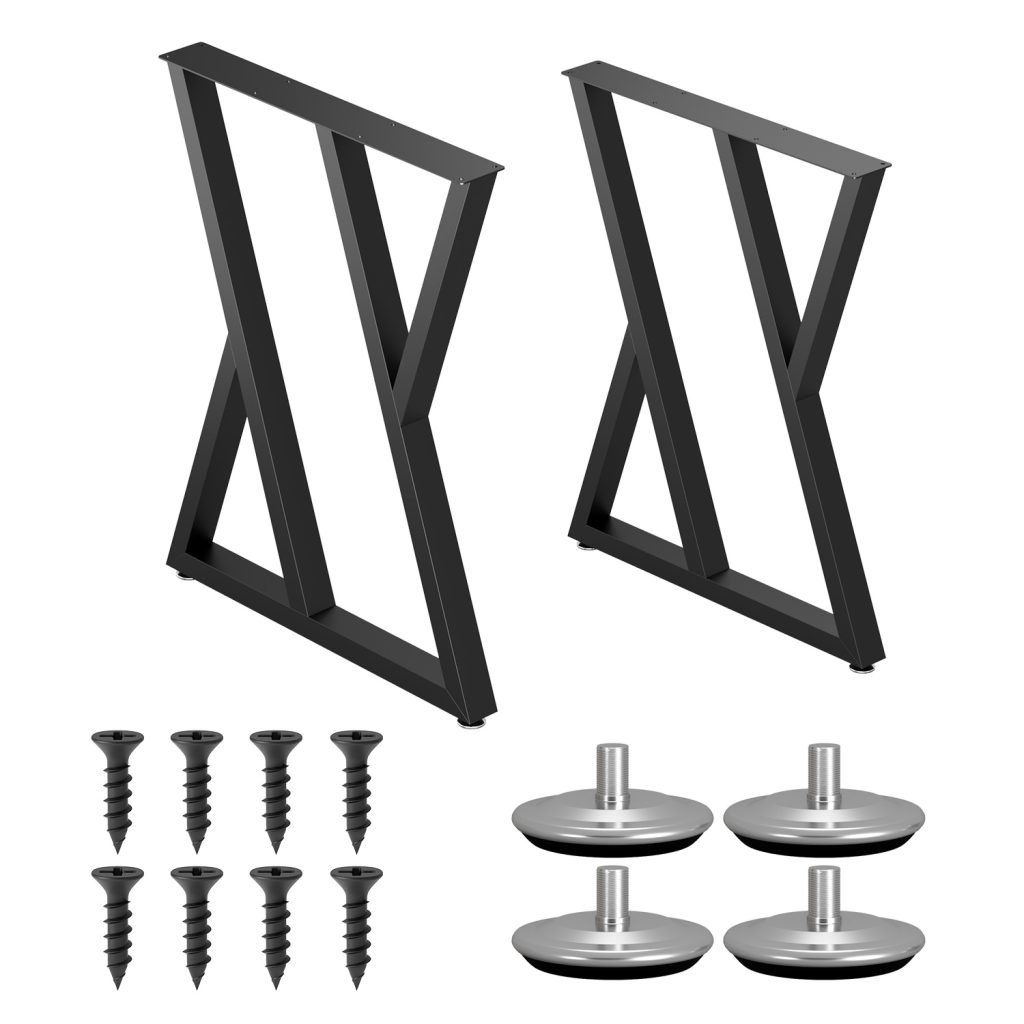
To choose a table base manufacturer in China, qualify the legal supplier and operating site, issue a revision-controlled RFQ, exchange approved drawings and BOM data, verify the mounting interface, approve a representative sample, and define finish, packing, inspection, release, and nonconformance rules before production. Treat catalogue pages as discovery material—not as the final specification. The purchase order should point to one controlled document set, and the approved drawing, BOM, sample record, and written acceptance criteria should take precedence over marketing copy.
This checklist is for importers, furniture brands, distributors, and contract buyers comparing China suppliers. Buyers often search by industrial locations such as Foshan as well as by country, but geography is not proof of capability. Compare candidates using the same evidence-based workflow. Jiansen is based in Hangzhou, not Foshan, and its online metal furniture leg category should likewise be treated as a starting point for a documented RFQ rather than a complete technical data sheet.
1. Define what the sourcing decision must prove
A sourcing project should answer three separate questions: Is the supplier a legitimate counterparty? Can it translate the buyer’s requirements into controlled product data? Can it repeatedly release conforming shipments? A persuasive website answers none of these questions by itself. Separate commercial qualification from technical approval and shipment release so that a strong result in one area cannot hide a gap in another.
Create a simple responsibility matrix. Procurement owns company checks and commercial terms; engineering owns drawings, interfaces, and revisions; quality owns the inspection plan and nonconformance process; logistics owns packing marks and shipping data. Name one person on each side who may approve changes. This prevents an informal chat message from silently changing a drawing or packing requirement.
Use evidence gates instead of supplier rankings
Score every candidate against the same required outputs: company documents, signed RFQ response, drawing review, sample record, packing proposal, inspection report, and closure of open issues. A candidate advances only when the required evidence is complete. This is more defensible than choosing a “top” factory from a search result or relying on factory-direct language.
2. Qualify the supplier and the actual operating chain
Ask for the legal company name in Chinese and English, registered address, business licence details, invoicing entity, receiving bank entity, export party, and the address where the relevant work and final inspection occur. Confirm whether the quotation comes from the manufacturer, a trading entity, or a coordinated supply chain. Any model can work, but the buyer needs transparency about who controls drawings, samples, inspection, packing, and corrective action.
Request a process map showing which activities are performed at the quoted site and which are outsourced. Do not turn that request into assumptions about processes that have not been evidenced. The purpose is traceability: if a finish issue or dimensional mismatch appears, the buyer must know who owns containment and who can approve rework or replacement.
Run a document-consistency check
- Match the company name across the licence, quotation, proforma invoice, bank details, and contract.
- Match the quoted product reference to the supplier’s drawing number and revision.
- Record the production, inspection, and dispatch locations separately.
- Ask who signs sample approval, change notices, inspection reports, and NCR responses.
- Escalate unexplained entity or address differences before any deposit or production authorization.
For company context, buyers can review Jiansen’s company page, then request transaction-specific evidence through the contact channel. Website information supports discovery; signed project records govern the order.
3. Send an RFQ that forces comparable answers
An effective RFQ does not ask only for “your best offer.” It provides enough identifiers and document requirements for each supplier to quote the same scope. Mark unknown fields as “supplier to propose for buyer approval” rather than leaving them blank. A blank field invites a hidden assumption, and hidden assumptions create incomparable quotations.
| RFQ field | What the buyer should provide or request | Required response |
|---|---|---|
| Project identity | Buyer project, end use, target market, internal item number | Supplier quotation and drawing linked to the same identity |
| Product reference | Product-page URL, model reference if present, photo, or buyer concept | Unique supplier item and drawing number; no reliance on title alone |
| Revision | RFQ revision and issue date | Acknowledged revision in every returned file |
| BOM definition | Component names, required material designation, bought-in parts, finish callout | Completed BOM with ambiguities flagged |
| Dimensions | Overall envelope and all fit-critical dimensions | Dimensioned drawing with units and buyer-agreed tolerances |
| Mounting interface | Tabletop interface, plate outline, hole pattern, fastener interface, orientation datum | Interface drawing and mating-part confirmation |
| Appearance | Approved colour reference, texture, gloss or visual reference as applicable | Finish sample method and acceptance record |
| Sample plan | What the sample must represent and how it will be reviewed | Sample ID, inspection evidence, deviations, approval status |
| Packing | Protection goals, pack configuration, marks, handling and destination constraints | Packing proposal, packing BOM, photos, and buyer approval |
| Inspection | Characteristics, methods, records, sampling agreement, release authority | Inspection plan and report format before production |
| Change control | Written approval required before any deviation | Named change-notice route and revision history |
| Commercial scope | Quantity scenario, delivery term, destination, documentation needs | Line-by-line inclusions, exclusions, and validity |
Use category and product URLs only to identify the starting family. For example, the ZT006 reference page, ZT007 reference page, and ZT009/ZT010 reference page do not replace a project drawing, BOM, or written pack definition.
4. Control drawings and data exchange
Issue a document register before technical discussion expands. The register should list each file name, document number, revision, owner, issue date, approval state, and superseded version. Give drawings stable names that do not depend on an email subject line. Require the supplier to return marked-up files instead of describing dimensional changes only in chat.
Make 2D drawings the acceptance map
The 2D drawing should identify datums, units, views, sections, critical dimensions, mounting details, finish zones, and any notes that affect inspection. ISO 129-1:2018 establishes general principles for presenting dimensions and associated tolerances on technical drawings and can guide clear expression. It does not supply project-specific tolerances. Buyer and supplier must agree the actual requirements based on function and the selected design.
Use 3D data for geometry, not silent authority
If 3D files are exchanged, state whether they are reference-only or controlling. Define which document wins if the 2D drawing, 3D model, BOM, quotation, sample, and website disagree. A practical order of precedence is the signed purchase specification, approved drawing and BOM, approved deviation records, approved sample record, and then other reference material. Whatever hierarchy is chosen, write it into the order.
5. Lock the mounting interface before approving appearance
A table base can look correct and still fail at assembly if the interface is undefined. Capture the mounting plate outline, hole locations, hole type, fastener interface, access direction, orientation, clearance, mating tabletop construction, and the datum used to position the base. Where a product page mentions bolt-on or bolt-fixing language, treat that as a general installation description only. It does not establish plate dimensions, spacing, or thread details.
Ask the supplier to overlay its interface drawing against the buyer’s mating-part drawing. Review the combined stack, not each part in isolation. Record unresolved items directly on the drawing. If the buyer has no final tabletop data, label the interface provisional and do not grant unconditional sample approval.
Require an interface confirmation package
- A dedicated top and section view with a clear datum system.
- A fastener schedule linked to the BOM.
- A mating-part sketch supplied or approved by the buyer.
- An assembly trial record showing the exact sample and revision used.
- A list of assumptions that must be closed before release.
6. Approve a representative sample with written conditions
A sample is useful only when it is traceable. Assign a sample ID and link it to the drawing revision, BOM revision, finish reference, and packing trial. The sample report should separate “conforms,” “accepted deviation,” “requires correction,” and “not evaluated.” A photograph without a scale, identifier, or revision is not an approval record.
Build a sample checklist around fit, interface, finish appearance, component completeness, assembly, marking, and packaging protection. Retain annotated photos and measurement records. If a deviation is accepted for the sample only, say so explicitly; otherwise it may be treated as permission for production.
Distinguish golden sample from engineering sample
An early engineering sample may answer one question while leaving others open. A golden sample should represent the final approved configuration to the extent agreed by both parties. List any characteristics that cannot be represented and define alternative evidence. Approval should be signed by authorized people, dated, and tied to the final document register.
7. Specify finish acceptance without inventing capability
Do not convert a web-page phrase such as black powder coating or matte black into a universal production promise. For each order, identify the finish system or buyer-approved supplier proposal, colour reference, visual texture, gloss expectation if relevant, areas to be coated or masked, reference sample, defect definitions, viewing method, and record required at inspection. If a requirement is not established, request a proposal and approve it before production.
Keep finish decisions connected to the drawing and BOM. A colour chip, signed panel, or approved product sample should carry an ID. Describe acceptable variation and defect handling in mutually understood language. This article intentionally does not supply performance durations or generic numeric acceptance limits; those values must come from the actual project specification and validated evidence.
8. Approve packing as a controlled design
Packing should be developed from the product configuration, surface sensitivity, loose components, handling route, storage conditions, and buyer labelling needs. Ask the supplier for a packing BOM, pack sequence, protection points, unit identification, carton or outer-pack marks, photo standard, and change-control method. Approve a packing trial with the representative sample rather than waiting for the first shipment.
Do not infer pack quantity or packaging dimensions from a product title. The square desk-leg reference page illustrates why a title must be reconciled with a signed packing BOM. Also compare visually related listings—such as the un-numbered pedestal reference and ZT013 reference—by controlled identifiers, not similar titles.
Apply logistics labels only when the buyer adopts the system
If the buyer’s logistics network uses GS1, define the required label data and responsibilities with reference to the GS1 Logistic Label Guideline, including the SSCC framework where applicable. Do not add GS1 fields by assumption. The buyer should state the identifiers, barcode data, label placement, verification method, and party responsible for allocating numbers.
9. Agree the inspection and release plan before production
Convert the approved documents into an inspection plan. For every characteristic, record the specification source, inspection stage, method, equipment, sampling rule, result format, and reaction to failure. Separate incoming checks, in-process evidence, final inspection, packing verification, and document review. Define who may release goods and which open issues prevent release.
ISO 2859-1:2026 provides an attribute-sampling framework. It should not be treated as a universal preset. Buyer and seller must agree the applicable inspection level, acceptance quality limit, lot definition, switching rules, and defect classes for the actual order. Record that agreement in the inspection plan instead of copying an unexplained default.
Make the pre-shipment report decision-ready
The report should identify supplier, buyer order, item, drawing revision, lot, sample inspected, equipment or method, results, defects, packing checks, photographs, open NCRs, and release decision. A report that says only “passed” is not enough. The buyer needs traceable results and the authority behind the decision.
10. Manage nonconformance with an NCR workflow
An NCR should state what failed, where it was found, the affected quantity or scope, the controlling requirement, immediate containment, disposition request, owner, due date, and verification evidence. Keep correction, rework, use-as-is concession, replacement, and corrective action distinct. Only an authorized buyer representative should approve a concession that changes an agreed requirement.
When a failure is discovered, stop release of the affected scope, identify related stock and work in progress, preserve evidence, and assess whether the issue reaches earlier or later lots. The supplier should propose containment and disposition; the buyer should approve the route in writing. Close the NCR only after required evidence is reviewed and the document register reflects any approved change.
Feed lessons back into controlled documents
If an NCR exposes an ambiguous drawing note, incomplete BOM, unclear inspection method, or weak pack instruction, revise the source document. Do not rely on a corrective-action email as the permanent specification. The next order should start from the corrected revision so the same ambiguity is not reintroduced.
11. Compare shortlisted suppliers with a release matrix
At the end of sourcing, compare evidence rather than sales claims. A useful matrix has rows for legal consistency, operating-chain transparency, RFQ completeness, drawing control, interface confirmation, sample traceability, finish approval, packing approval, inspection readiness, NCR responsiveness, and document ownership. Mark each row as approved, conditional, open, or rejected, with a link to evidence.
Online product references can help a buyer frame the conversation. Additional examples include the ZT026/ZT027 listing and the ZT020/ZT021 listing. However, inconsistent or missing website fields must never be converted into capability claims. Jiansen buyers should request the approved project drawing, BOM, sample record, and packing approval for the exact order.
12. Use this purchase-order release checklist
- Legal, invoicing, banking, export, operating, inspection, and dispatch entities are understood.
- The RFQ response lists every inclusion, exclusion, assumption, and buyer decision.
- The purchase item has a unique item number, drawing number, and revision.
- The BOM and drawing use consistent component and finish descriptions.
- The mounting interface has been checked against the mating tabletop data.
- The sample is traceable, inspected, and approved with deviations clearly limited.
- The finish reference and visual acceptance method are recorded.
- The packing BOM, trial, marks, loose-part control, and photo standard are approved.
- The inspection plan states methods, records, sampling agreement, defect classes, and release authority.
- Every open NCR has an agreed disposition and release impact.
- The order states document precedence and prohibits unapproved changes.
- The final release package and retention responsibility are defined.
For broader design and material education, keep the procurement workflow separate from existing resources such as choosing a metal furniture leg, modern stainless steel table legs, and table legs for modern interiors. The present checklist governs how buyer and supplier turn a selected concept into approved, inspectable order data.
Frequently asked questions
How do I verify a table base manufacturer in China?
Verify the legal entity, invoicing and bank names, export party, operating location, and who controls drawings, samples, inspection, packing, and corrective action. Then require traceable evidence at each approval gate instead of relying on a website claim or city-based search result.
What should I include in a table base RFQ?
Include the project identity, unique item reference, RFQ revision, drawing and BOM requirements, fit-critical dimensions, mounting interface, finish reference, sample plan, packing goals, quantity scenario, shipping destination, inspection records, change control, and requested commercial inclusions and exclusions.
Which document should override a supplier product page?
The order should define document precedence. In practice, the signed purchase specification, approved drawing and BOM, approved deviation records, and approved sample record should control ahead of catalogue titles, photos, or general marketing descriptions.
How should a buyer approve the mounting interface?
Compare the supplier’s interface drawing with the mating tabletop data. Confirm the plate outline, hole pattern, hole and fastener interface, orientation datum, access, and clearance, then record an assembly trial against the exact sample and drawing revision.
How should inspection sampling be agreed?
Buyer and seller should agree the lot definition, defect classes, inspection level, acceptance quality limit, switching rules, methods, records, and release authority for the order. ISO 2859-1:2026 may provide the attribute-sampling framework, but it does not justify an unexplained default.
What happens when a pre-shipment inspection finds a defect?
Hold the affected scope, open an NCR, identify the controlling requirement, contain related stock, document the affected quantity, and obtain an approved disposition. Release only after required correction, concession, replacement, or other evidence has been reviewed by the authorized buyer representative.
Conclusion: buy the controlled specification, not the listing
The safest way to source from a table base manufacturer is to create a chain of approved evidence from qualification through shipment release. Use web listings to discover options, then replace assumptions with a unique item identity, controlled drawings, BOM, interface confirmation, sample approval, finish and packing records, inspection results, and disciplined NCR closure. That workflow makes quotations comparable and gives both parties a clear basis for production and release.
