
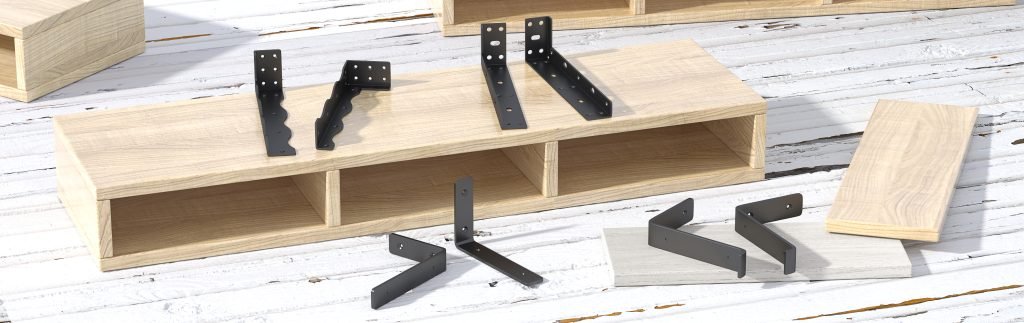
Direct answer: qualify outdoor bracket suppliers by issuing the same controlled RFQ to every candidate and comparing their drawing control, material identification, surface preparation, coating evidence, sample discipline, inspection method, packaging, and change-control process. Do not approve a supplier from a product photo, a generic “outdoor” claim, or the lowest unit price. The buyer must define the actual bracket application, interfaces, exposure, finish, fastener system, inspection plan, and release evidence.
This guide is for importers, distributors, outdoor-living brands, construction-hardware buyers, and OEM teams sourcing metal brackets for pergolas, shelves, frames, enclosures, supports, and custom assemblies. It does not assign a corrosion life, coating thickness, load rating, salt-spray duration, tolerance, order quantity, price, or production schedule to Jiansen or any other supplier. Those values require project-specific engineering and written agreement.
Define the outdoor bracket before requesting quotations
“Outdoor bracket” is not a complete specification. A bracket under a covered residential shelf faces a different environment from a connector exposed at a coastal pergola, a commercial shade structure, or an industrial enclosure. Start by describing the whole assembly, not only the metal part. Identify the supported component, mating materials, mounting surface, drainage path, access for tools, visible zones, field cuts, fasteners, and maintenance conditions.
Use one revision-controlled drawing set. Mark datums, hole centers, slots, bends, welds, edges, contact faces, and orientation. If the buyer has not yet decided a requirement, label it as an open engineering question. Silent assumptions become quotation differences and later nonconformities.
Include these fields in the RFQ
| RFQ field | Buyer input | Supplier evidence |
|---|---|---|
| Application | Assembly, mounting surface, indoor/outdoor boundary, service location | Manufacturing review and unresolved questions |
| Geometry | Controlled drawing, datums, interfaces, holes, bends, weld symbols | Marked-up drawing and process route |
| Material | Grade or approved alternatives, thickness definition, substitution rule | Material record and identification method |
| Finish | Coating system, colour reference, visual zones, repair rule | Process description, approved reference, inspection method |
| Assembly | Fasteners, mating parts, installation sequence, tool access | Fit review and assembly sample |
| Packaging | Part separation, edge protection, labels, carton and pallet map | Packing sample and label proof |
| Quality | Characteristics, method, sampling, acceptance and escalation rules | Inspection record and nonconformance workflow |
Separate material, fabrication, and coating evidence
A strong supplier file keeps three evidence streams separate. Material evidence identifies what entered production. Fabrication evidence shows how the part was cut, formed, welded, drilled, deburred, and verified. Coating evidence documents surface preparation, coating application, curing or processing, handling, and inspection. A polished sample cannot replace these controls.
Buyers can review Jiansen’s metal fabrication category as a capability starting point, but the purchase order should refer to the approved drawing and specification rather than web copy. The supplier should disclose proposed substitutions before production, not after inspection.
Ask process-specific questions
- Which features establish the manufacturing datums?
- How are burrs, sharp edges, weld spatter, and blocked holes controlled?
- How are parts cleaned and protected between fabrication and finishing?
- How are colour, texture, coverage, adhesion, and handling damage evaluated?
- What happens when a process, material source, fixture, or subcontractor changes?
Specify coating as a system, not a colour name
A colour name alone does not define outdoor protection. The buyer should identify substrate preparation, coating family, colour reference, appearance zones, allowed masking, hole and edge treatment, mating-surface requirements, touch-up rules, and the evidence needed for approval. Environmental suitability must be evaluated for the actual project.
The ISO standards catalogue can help buyers locate current standards relevant to corrosion protection and coating systems. The buyer and qualified technical parties must choose the applicable document and edition. A standard reference does not automatically define the project’s exposure category, design life, preparation grade, coating build, or acceptance limits.
Control adhesion testing correctly
ASTM D3359-23 describes tape-test methods for rating coating adhesion. Its published scope also explains limitations, including film-thickness considerations, operator skill, tape behaviour, and the fact that the result is not an absolute bond-force value. If the method is selected, define the applicable method, specimen, conditioning, operator procedure, acceptance rule, and reporting format in writing.
Do not copy a test name into an RFQ without defining who performs it, on which sample, at what production stage, and how a failed result is handled. Jiansen can discuss finish-control options for a defined project, but no test result should be assumed without actual evidence.
Approve a sample that represents production risk
A useful sample represents the intended material, fabrication route, tooling, welding approach, finish process, fasteners, and packing concept. Record its drawing revision, sample ID, approval date, deviations, photographs, and retained reference status. If production later changes a controlled factor, the buyer should decide whether reapproval is required.
For structural outdoor connectors, buyers may review the metal pergola bracket range. For lighter wall or display applications, the shelf bracket range provides another manufacturing reference. These categories are not interchangeable engineering specifications; each project still needs its own interface and acceptance data.
Build an inspection plan around critical interfaces
The inspection plan should connect every important characteristic to a method, sample rule, record, and reaction plan. Give priority to features that affect assembly, safety, weather exposure, appearance, or shipment protection. Avoid vague rows such as “check quality.”
| Characteristic | Inspection approach | Record |
|---|---|---|
| Part identity and revision | Compare label, traveller, drawing and order | Lot and revision log |
| Mounting interface | Measure controlled features or use an approved fixture | Dimensional results |
| Edges, holes and weld area | Defined visual and functional checks | Inspection checklist and photos |
| Finish appearance | Compare under agreed viewing conditions with approved reference | Appearance record |
| Coating test | Use only the agreed method on the agreed specimen | Test record |
| Assembly fit | Trial fit with representative mating parts and fasteners | Fit approval |
| Packaging | Verify separation, protection, count, labels and carton map | Packing audit |
Use sampling only after defining the lot
Sampling cannot compensate for an undefined lot or an unstable process. Define how production is grouped, which characteristics are inspected, the sampling procedure, acceptance and rejection numbers, escalation after failure, and rules for reinspection. Different risks may require different controls.
Use the ISO catalogue to locate the current edition of relevant acceptance-sampling standards, then have qualified parties set the project parameters. Never treat a generic “standard inspection” statement as a complete plan.
Design packaging as part of outdoor-finish quality
Finish damage often occurs after inspection. Define how coated faces are separated, how edges and projecting features are protected, how moisture and abrasion risks are controlled, and how cartons are stacked. The packing map should show part orientation, accessories, labels, inner protection, carton contents, and pallet pattern.
GS1 barcode standards explain how identifiers and attributes can be encoded for supply-chain use. The GS1 Logistic Label Guideline provides a framework for identifying logistics units. Apply these only when they match the buyer’s traceability system; otherwise define the required label data and verification method directly.
Compare outdoor bracket suppliers with one evidence matrix
Send the same RFQ and response template to every candidate. Score only evidence received for the project. A supplier that clearly identifies open questions is safer than one that silently promises compliance.
| Decision area | Evidence to compare | Warning sign |
|---|---|---|
| Drawing control | Revision response and marked-up interface review | Quotation from image only |
| Fabrication | Process route, fixture concept, inspection method | Generic equipment list only |
| Coating | Process description, reference sample, agreed tests | Colour name used as full specification |
| Quality | Characteristic-method-record-reaction matrix | “Full inspection” without definitions |
| Packaging | Packing map, label proof, protection sample | No control of coated-face contact |
| Change control | Written approval path for controlled changes | Substitution allowed without notice |
Release production only after closing open questions
Before release, confirm that commercial terms point to the same controlled drawing and specification used for technical approval. Close every open interface, material, finish, inspection, packing, and labelling question. Record approved deviations separately rather than modifying requirements informally.
Jiansen can review an RFQ for custom outdoor metal brackets and identify manufacturability questions, but the buyer remains responsible for defining the actual assembly, applicable standards, project exposure, engineering verification, and acceptance criteria.
Frequently asked questions
What should an outdoor bracket RFQ include?
Include the application, controlled drawing, mounting interfaces, material, fabrication details, coating system, visual zones, fasteners, sample plan, inspection methods, packaging map, labels, and change-control rules.
How should buyers compare outdoor bracket suppliers?
Give every supplier the same RFQ and compare project-specific evidence for drawing control, fabrication, coating, inspection, packaging, traceability, and change management rather than comparing price or photographs alone.
Is a powder-coat colour enough to specify an outdoor finish?
No. Define surface preparation, coating family, colour reference, appearance zones, edge and hole treatment, masking, touch-up rules, test methods, and project-specific acceptance criteria.
Can ASTM D3359 prove total outdoor durability?
No. ASTM D3359 rates coating adhesion by specified tape-test methods and has stated limitations. Outdoor suitability also depends on the substrate, preparation, coating system, environment, design, damage, and maintenance.
What should an approved bracket sample record?
Record the drawing revision, sample ID, material and process route, finish reference, fasteners, deviations, photographs, approval date, retained-reference status, and triggers for reapproval.
Which bracket features need the closest inspection?
Prioritize mounting interfaces, controlled dimensions, holes and slots, edges, weld areas, mating surfaces, finish coverage, visible zones, fastener identity, assembly fit, and packaging protection.
How should coated outdoor brackets be packaged?
Use an approved packing map that separates coated faces, protects edges and projections, controls movement and abrasion, identifies accessories, defines labels, and records carton and pallet contents.
Conclusion
The best outdoor bracket suppliers turn a vague product request into controlled evidence. Define the assembly, drawing, material, fabrication, coating, sample, inspection, packaging, and change rules before comparing quotations. Approve representative evidence, release only closed specifications, and keep shipment records tied to the correct revision.
