
A barn door can change how a room feels. It can save floor space, create a clean divider, and add a strong design detail. However, the door will only work well if the hardware is chosen correctly. One reason materials and finishes matter is rust. Rust forms when iron reacts with oxygen in the presence of moisture, so any steel hardware needs smart protection and proper care, especially in humid areas.
This guide shares seven practical tips to help you choose the right barn door sliding hardware set for your project, with special attention to carbon steel systems like the ones shown on HZ Jiansen’s Sliding Barn Door Hardware Carbon Steel category page.
Tip 1: Confirm your door size and door weight first
Before you pick a style, confirm the basics. Track length and hardware strength must match your door.
Measure:
- Door width and height
- Door thickness (important for hanger fit)
- Approximate door weight (important for track and rollers)
A simple rule that helps: choose a system with a weight rating that is comfortably higher than your door weight. That extra margin supports smoother movement over time, especially for busy homes or commercial spaces.
HZ Jiansen lists many kit styles in this category (bypass, wagon wheel, spoke wheel, top-mounted systems), which makes door size and usage the best starting point before you pick a look.
Tip 2: Choose the right track length and wall space
A barn door needs clear wall space so the panel can slide fully open. In most cases, you need a track length that allows the door to move far enough to clear the opening.
Also check:
- Wall construction (stud placement for secure mounting)
- Any switches, vents, frames, or trim that may block the track
- Ceiling height if you are using a top-mounted look
If you are designing a room divider or closet opening, an adequately sized barn door sliding hardware set prevents half-open doors and daily frustration.
Tip 3: Pay close attention to the barn door track and roller system
The barn door track and roller system is where smoothness comes from. If this part is not right, the door can feel noisy, shaky, or uneven.
When comparing roller systems, look for:
- Roller material quality and stable wheel design
- Strong hanger arms and reliable fasteners
- Door stops and anti-jump parts (for safety and control)
HZ Jiansen describes their carbon steel sliding hardware as stable and designed for smooth operation, which is exactly what you should verify when comparing kits.
Tip 4: Pick the best material for your environment (carbon steel vs stainless steel)
Carbon steel is a popular choice because it is strong and supports a wide range of classic barn door styles. However, carbon steel needs a protective finish to reduce rust risk over time.
Many carbon steel kits use powder coating. Powder-coated finishes are widely used because they resist scratches, corrosion, and abrasion better than many conventional finishes when applied correctly.
If the door is in a humid area (laundry, bathroom area, coastal locations), you should be more strict about finish quality and maintenance. If you want more natural corrosion resistance, stainless steel is another option, but it often costs more. HZ Jiansen also separates stainless steel and carbon steel categories, which helps buyers compare by environment and design needs.
Tip 5: Match the hardware style to the door and the room
Style matters, but it should not override function. The good news is that you can usually get both.
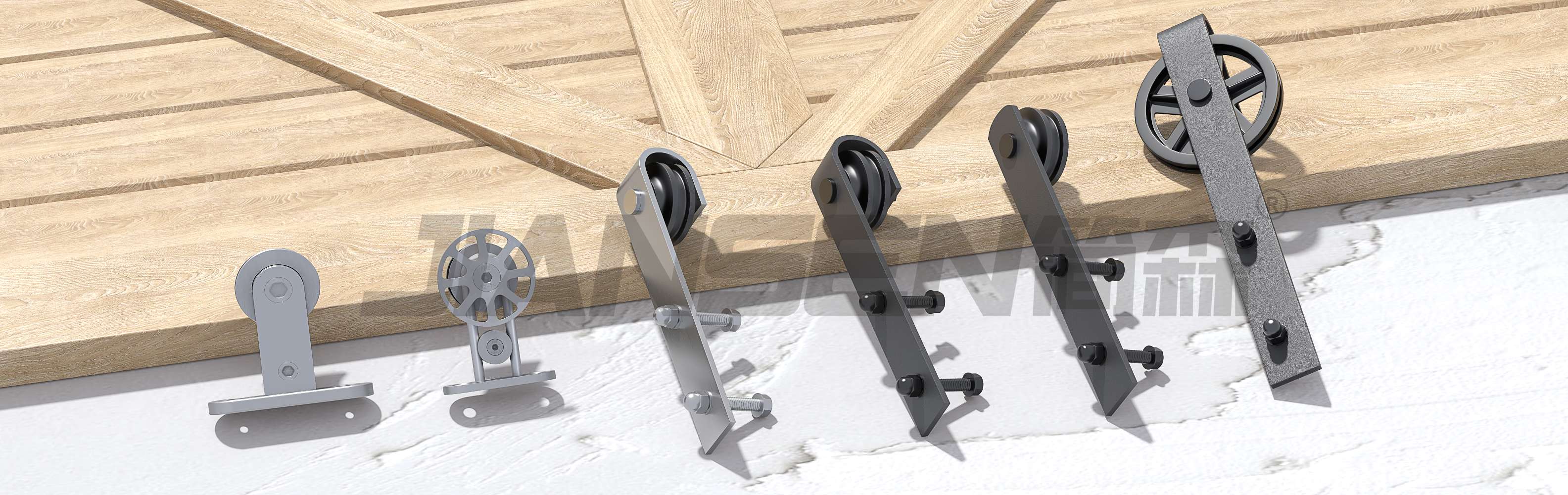
HZ Jiansen’s carbon steel category shows multiple visual styles, such as:
- Horseshoe shape kits
- Spoke wheel and wagon wheel styles
- Cross-style kits
- Bypass systems for two doors
For a modern interior, cleaner lines often fit best. For farmhouse or industrial spaces, wheel and strap styles can look intentional. If you are choosing a hotel, office, or commercial area, aim for a style that looks professional and also supports frequent use, which the site highlights as a target use case.
Tip 6: Make sure the kit includes the small parts that prevent daily issues
Many sliding doors fail in small ways. The panel swings at the bottom, the door hits the wall, or the hardware loosens over time. A complete kit reduces those problems.
Check that your kit includes:
- Floor guide (keeps the door stable at the bottom)
- Door stoppers (prevent hard impacts at the ends)
- Anti-jump components (help the door stay safely on the track)
- Spacers or brackets (for correct wall distance)
- Clear installation instructions
On HZ Jiansen’s site, the product category is presented as full kits and related accessories (handles, floor guides, locks, accessories), which is helpful if you want a complete solution or need to add parts later.
This is also where the interlinking phrase fits naturally: if you are comparing systems across finishes and door styles, it can help to browse a broader barndoor hardware kit collection first, then narrow down to the carbon steel style you want.
Tip 7: Buy from a supplier that shows clear categories, real product variety, and business credibility
Hardware is not only a design purchase. It is a safety and performance purchase. So, the supplier matters.
On HZ Jiansen’s website, you can see:
- A dedicated carbon steel sliding hardware category with multiple model options
- Broader hardware categories beyond barn doors (fence hardware, garage door hardware, fabrication), which suggests manufacturing experience
- Company background details, including “Founded in 2004” and a focus on hardware manufacturing
If you are ordering for a contractor job or a commercial space, these details help reduce risk. If you are ordering for a home project, they help you feel confident that the barn door sliding hardware set is not an afterthought product.

Barn Door Sliding Hardware Set Installation Guide
Having correctly installed barn door hardware set is crucial to the efficient operation, safety, and long-term viability of the set. Follow this protocol to ensure a dependable and professional installation.
- Prep before installation
Before initiating, make sure all components are part of the mix:
Track the train
Rollers/hangers
Stops at the door
Floor mark
Mounting posts and binders
Supplies necessary:
Measuring device
Level
Drill and bits of drill
Stud finder or appropriate anchors for the wall.
Wrench and screwdriver
Ensure the wall’s structure can accommodate the combined weight of the door and other hardware. Solid wooden studs or solid concrete walls are appropriate.
- Indicate and Track the Track’s position.
Measuring the height of the door and adding the extra clearance specified by the manufacturer of the hardware.
Indicate a horizontal line that will serve as the reference for the track’s installation.
Use a ruler to make the line perfectly straight—this is of paramount importance to having a smooth slide.
Tip: The track is typically positioned above the entrance’s opening, which allows for sufficient clearance for rollers and the door’s movement.
- Complete the Track Rail
Locate the studs in the wall using a stud finder.
Line the track with the marked line and pre-drill holes.
Fasten the track using heavy-duty anchors or lag bolts.
Check the alignment of the struts with the beam before fully embracing all of the fasteners.
A properly positioned track will have both stability and a long-term effect that is lessened.
- Attach Roloers to the Door’s Panel
Install the rollers or hangers at the top of the door in accordance with the spacing rules.
Ensure that the bolts are effectively secured, but don’t overdo it.
Ensure that rollers do not have any obstructions in their movement.
- Fasten the Track to the Door
Carefully raise the door and place the rollers on the track.
Slide the door forward and backward to verify proper movement.
Adjust the roller’s elevation if necessary to achieve proper placement and clearance.
- Install both Door Stops and a Floor Guide
Attach stops at both ends of the track to prevent the door from slipping off.
Line the floor with a guide to maintain the door’s position and prevent it from moving in a lateral direction.
Adjust the guide so it does not scrape or brush against the door’s surface.
- Last Inspection and Amendment
Test the door’s efficiency multiple times to ensure a quiet, smooth experience.
Examine all of the bolts and fasteners in terms of their tightness.
Confirm the door is solid and does not shake or sway.
Quick checklist before you order
Use this fast list to avoid wrong sizing and missing parts:
- Door width, thickness, and weight confirmed
- Track length fits the opening and wall space
- Barn door track and roller systemsupports smooth rolling and safety parts
- Finish is suitable for the humidity level (powder coating helps protect steel)
- Floor guide and stoppers are included
- Style matches your space
- Supplier provides clear product specs and support channels
Frequently Asked Questions
1) How do I choose the right barn door sliding hardware set for a heavy door?
Start with the door weight, then select a kit with a clearly stated capacity above that weight. Also, confirm the track thickness, hanger strength, and roller build quality. For heavy doors, the barn door track and roller system must feel stable, and the mounting surface must be strong enough to hold the load.
2) Is carbon steel hardware a good choice for indoor barn doors?
Yes, carbon steel is a strong and common option for indoor use. The main factor is finish quality. Powder-coated finishes are widely used because they help resist corrosion and wear in normal indoor conditions.
3) What parts should a complete barn door track and roller system include?
A complete system normally includes track, rollers/hangers, mounting hardware, door stoppers, and a floor guide. Anti-jump parts are also important for safety. If any of these are missing, you may need to buy extras later.
4) Can I use a barn door sliding hardware set in humid areas?
You can, but be stricter about finish protection and upkeep. Rust risk increases when moisture is present because rust forms when iron reacts with oxygen in the presence of moisture. Choose a strong protective finish and inspect the hardware regularly.
5) How do I decide between single-door and bypass hardware?
Choose single-door hardware when you only need one panel to slide across the opening. Choose a bypass when you need two panels to slide past each other, such as a wider closet. HZ Jiansen’s carbon steel category shows bypass options alongside other styles, so you can compare based on layout.
